



Egg Freezing Trend in Fertility
TL;DR — Quick Summary
- Egg freezing is growing fast — more women are choosing to preserve fertility on their own timeline
- Your 20s and early 30s produce the highest quality eggs, but freezing is possible at any reproductive age
- Modern vitrification has dramatically improved success rates compared to older freezing methods
- Same-sex couples and single women are among the fastest-growing groups using fertility preservation
- Frozen eggs can be stored safely for years and used as part of a standard IVF cycle when you’re ready
More women than ever are choosing to freeze their eggs — and the reasons are as varied as the women themselves. Career goals, the right relationship not yet found, medical necessity, or simply wanting more time. Whatever the reason, egg freezing has moved from a niche procedure to one of the fastest-growing trends in reproductive medicine.
Why Is Egg Freezing Becoming So Common?
Contents
A generation ago, women who wanted to delay having children had no good way to preserve that option. Today they do. Egg freezing — medically called oocyte cryopreservation — lets women in their 20s and 30s bank their healthiest eggs now and use them when the timing is right.
The drivers behind the trend are straightforward. Women are spending more years in education and building careers before starting families. Single women who want children but haven’t found the right partner are choosing fertility preservation as a solo decision. And same-sex couples are increasingly turning to assisted reproduction as a clear path to parenthood, with minimally invasive IVF protocols making the process more accessible than ever.
What Happens to Egg Quality Over Time?
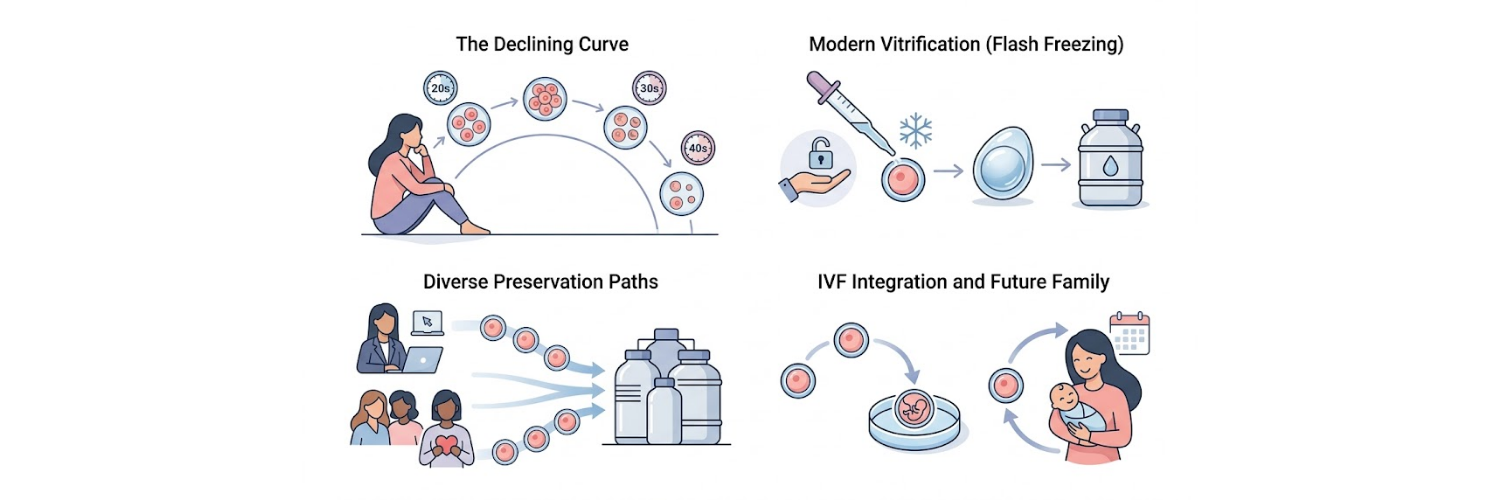
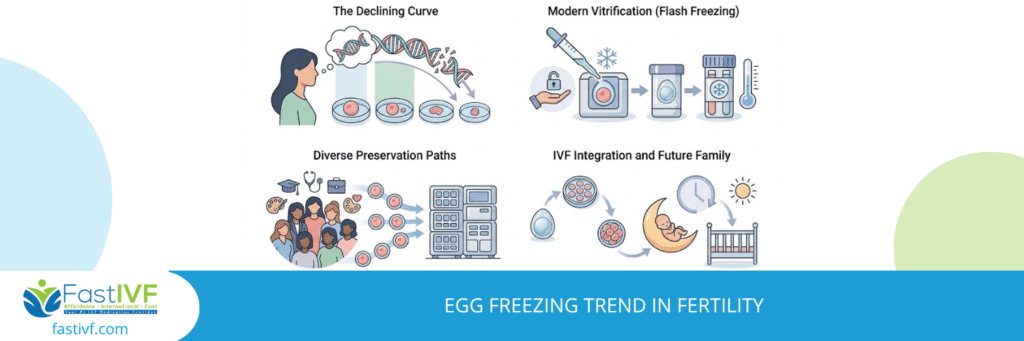
You’re born with all the eggs you’ll ever have. From that point on, the number declines steadily — and so does quality. By the mid-30s, that decline accelerates. Egg quality drops with age in ways that affect both fertilization rates and the risk of chromosomal abnormalities in embryos.
This is why timing matters. Women in their 20s typically produce more eggs per stimulation cycle, and those eggs have the best chromosomal profile. That said, egg freezing is an option at any reproductive age — the earlier you do it, the more you have to work with later. If you’re concerned about your current egg supply, our guide on what to do if you have a low egg reserve covers your options.
How Has Technology Changed Egg Freezing?
The older slow-freeze method had modest success rates — ice crystals could damage the egg during freezing. Modern vitrification changed that. Eggs are flash-frozen so rapidly that ice crystals don’t have time to form. Survival rates after thawing now exceed 90% in most clinics, and pregnancy outcomes using frozen eggs are comparable to those using fresh ones.
These improvements are a big reason egg freezing has moved from experimental status — which the American Society for Reproductive Medicine (ASRM) removed in 2012 — to a standard, widely available procedure.
How Does Egg Freezing Connect to IVF?
When you’re ready to use your frozen eggs, they’re thawed and fertilized in a lab as part of a standard IVF cycle. The resulting embryo is then transferred to your uterus. The stimulation medications used during egg freezing are the same ones used in IVF — FSH-based injectables to encourage your ovaries to produce multiple eggs in one cycle.
For a full breakdown of what the IVF medication protocol looks like, see our IVF medications guide. If you want to understand the egg freezing process itself in more detail before deciding, our post on what you need to know about egg freezing covers the key questions.
For more on the egg freezing process and costs, read NPR’s guide to egg freezing costs and the process.
Frequently Asked Questions
Who is egg freezing most commonly used by?
The most common groups are women in their late 20s and early 30s who want to delay childbearing for personal or professional reasons, women facing medical treatments like chemotherapy that could affect ovarian function, and single women or same-sex couples building families on their own timeline.
At what age should I consider freezing my eggs?
Most fertility specialists recommend considering egg freezing before 35. Your 20s give you the best combination of egg quantity and quality. That said, women in their mid-30s can still get meaningful results — the key is not waiting until quality has declined significantly. See our post on IVF in your 40s if you’re past that window and exploring your options.
How long can frozen eggs be stored?
Frozen eggs can be stored safely for many years — in some cases over a decade — with no meaningful decline in quality. Storage is typically maintained in liquid nitrogen at fertility clinics, with annual fees charged for the ongoing preservation.
Does freezing your eggs guarantee a future pregnancy?
No. Egg freezing improves your odds but doesn’t guarantee a pregnancy. Success depends on how many eggs were retrieved, their quality at the time of freezing, and how your body responds to the IVF transfer cycle later. More eggs banked generally means better odds.
How can I afford egg freezing medications?
Stimulation medications are one of the biggest costs in any egg freezing cycle. Fast IVF provides European-sourced IVF medications at significantly lower prices than US retail. Get a fast quote to see how much you could save on your protocol.