



Need to Know About Egg Freezing
TL;DR — Quick Summary
- Egg freezing lets you preserve your fertility now for use later
- Your 20s is the best time — more eggs, better quality
- Frozen eggs are just as safe and effective as fresh eggs for IVF
- The process uses the same hormone medications as a standard IVF stimulation cycle
- Frozen eggs have a roughly 90% survival rate after thawing with modern vitrification
Egg freezing has changed what’s possible for women who aren’t ready to have children yet — or who face medical reasons that could affect their future fertility. If you’ve been wondering whether it’s right for you, here’s what you actually need to know.
What Is Egg Freezing and Who Is It For?
Contents
Egg freezing — medically called oocyte cryopreservation — is a process where your eggs are retrieved, frozen, and stored until you’re ready to use them. It’s recommended for women who want to delay childbearing for personal or professional reasons, women about to undergo cancer treatment that may affect ovarian function, and anyone who knows they want children but isn’t in the right circumstances yet.
Doctors generally advise considering egg freezing before age 35. Egg quality declines with age, and retrieving eggs while they’re at their best gives you the strongest foundation for a future pregnancy.
What’s the Best Age to Freeze Your Eggs?
Your 20s. That’s not just a general guideline — it’s backed by retrieval data. Younger ovaries respond better to stimulation medications, producing more eggs per cycle. More eggs retrieved means more viable embryos if and when you’re ready to use them. Women in their early 30s can still get good results, but the numbers tend to drop as the decade progresses.
How Does the Egg Freezing Process Work?
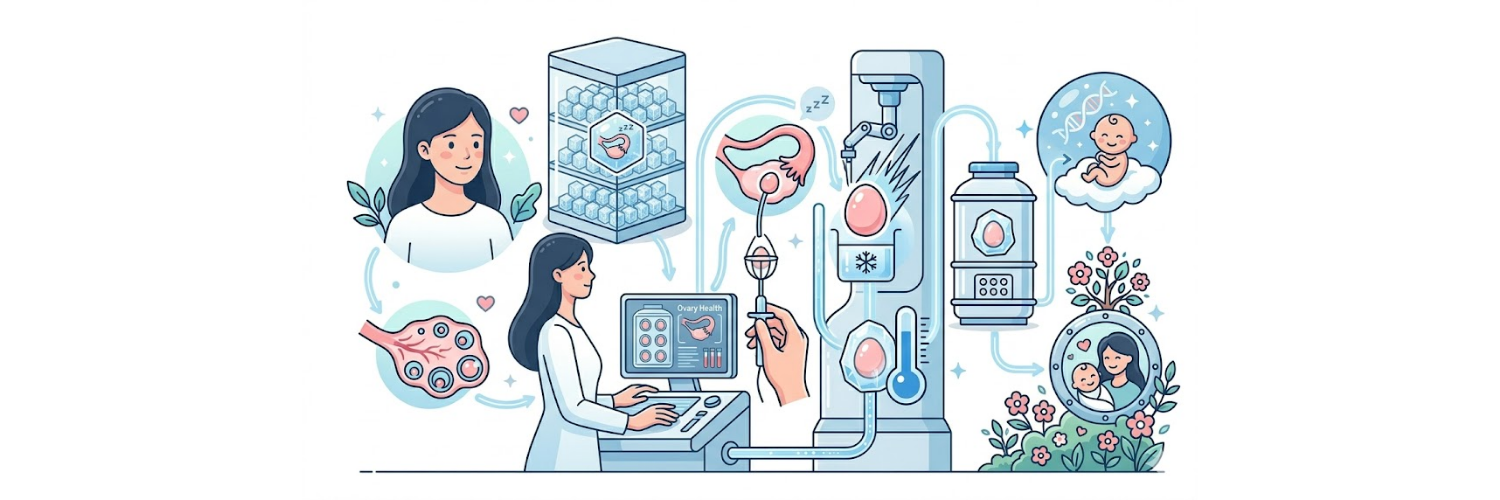
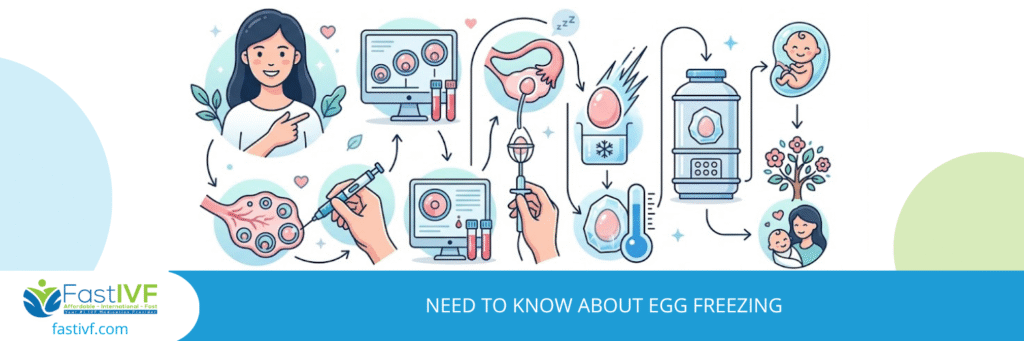
The egg freezing cycle mirrors the stimulation phase of a standard IVF cycle. You’ll take IVF stimulation medications — typically FSH-based injectables — for around 10–14 days to encourage your ovaries to produce multiple eggs. Your clinic monitors your progress with blood tests and ultrasounds.
Once your follicles reach the right size, you’ll take a trigger shot to finalize egg maturation. About 36 hours later, eggs are retrieved during a short outpatient procedure under sedation. The retrieved eggs are then flash-frozen using a technique called vitrification — a rapid freezing method that prevents ice crystal damage and gives frozen eggs roughly a 90% survival rate upon thawing.
Are Frozen Eggs as Good as Fresh Eggs?
Yes. The American Society for Reproductive Medicine (ASRM) removed the “experimental” label from egg freezing after reviewing over 1,000 studies. Research consistently shows no significant difference in pregnancy outcomes or baby health between cycles using frozen eggs versus fresh ones. It also doesn’t increase the risk of chromosomal abnormalities or birth defects.
Does Egg Freezing Guarantee a Future Pregnancy?
No — and any clinic that implies otherwise should raise a red flag. Egg freezing preserves your options, it doesn’t guarantee them. Success depends on how many eggs are retrieved, your age at the time of freezing, and how your body responds to stimulation. Freezing more eggs in a single cycle — or across multiple cycles — improves your odds.
If you’re also exploring IVF now rather than later, our guide to IVF in your 40s covers what changes and what doesn’t as you get older.
Frequently Asked Questions
Is egg freezing painful?
The daily injections during stimulation can cause mild bloating or tenderness. The egg retrieval itself is done under sedation — most patients feel little during the procedure and mild cramping afterward that resolves within a day or two. Our post on how to avoid bruising from IVF injections has tips that make the stimulation phase easier.
How many eggs do I need to freeze?
Most fertility specialists recommend freezing 10–20 mature eggs to have a reasonable chance of at least one successful pregnancy later. The exact number depends on your age and goals. Your doctor will give you a personalized estimate based on your hormone levels and ovarian reserve.
How much does egg freezing cost?
Costs vary by clinic and location but typically include the stimulation cycle, retrieval procedure, and annual storage fees. The medications alone can be a major expense in the US. Sourcing your stimulation medications internationally through Fast IVF can reduce that cost significantly. Get a fast quote to see what you’d save.
What medications are used for egg freezing?
The same FSH-based injectables used in IVF stimulation — such as Gonal-F, Menopur, or Fostimon — plus a trigger shot like Ovitrelle to finalize egg maturation. For a full breakdown, see our IVF medications guide.
Can I still get pregnant naturally after freezing my eggs?
Yes. Egg freezing does not affect your natural fertility. Your ovaries continue to function normally after the procedure, and you can still conceive naturally if circumstances allow.