


IVF for 40s Age
TL;DR — Quick Takeaways
- IVF is possible in your 40s, but egg quantity and quality decline with age — so timing matters.
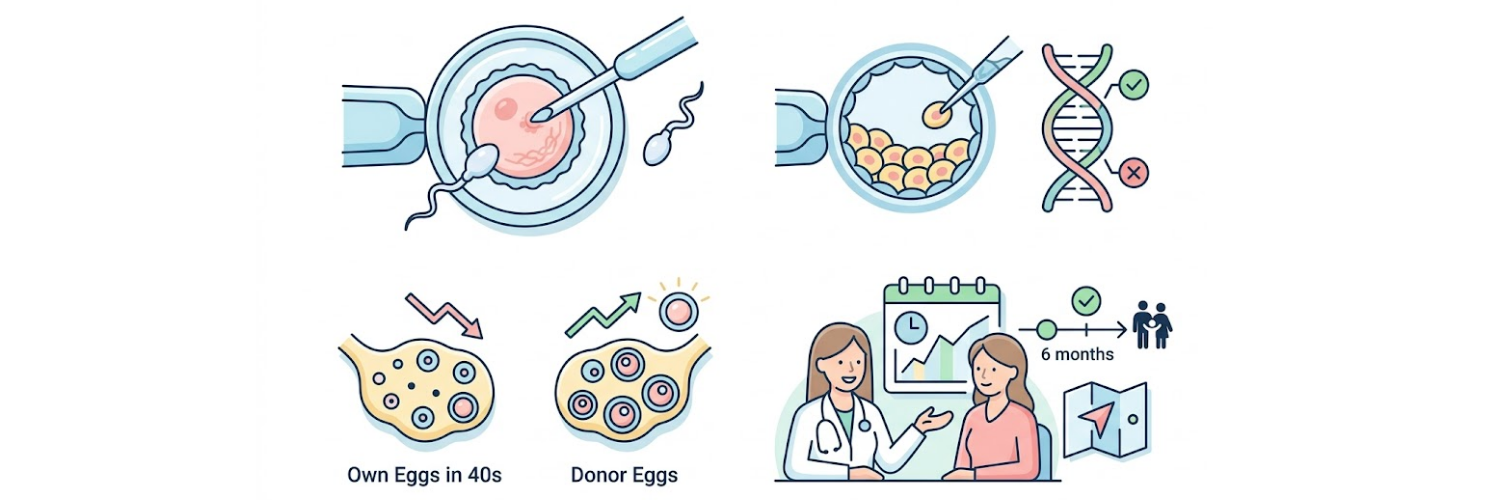
- Genetic testing (PGT) during IVF can significantly improve success rates for women over 40.
- Donor eggs are a strong option when egg quality is a limiting factor.
- Seeing a specialist after just 6 months of trying (not 12) is recommended if you’re over 35.
IVF in your 40s is more common than ever, but age does affect how the process works and what your options are. Understanding the basics helps you ask better questions and make more confident decisions with your doctor.
What Is IVF and How Does It Work?
Contents
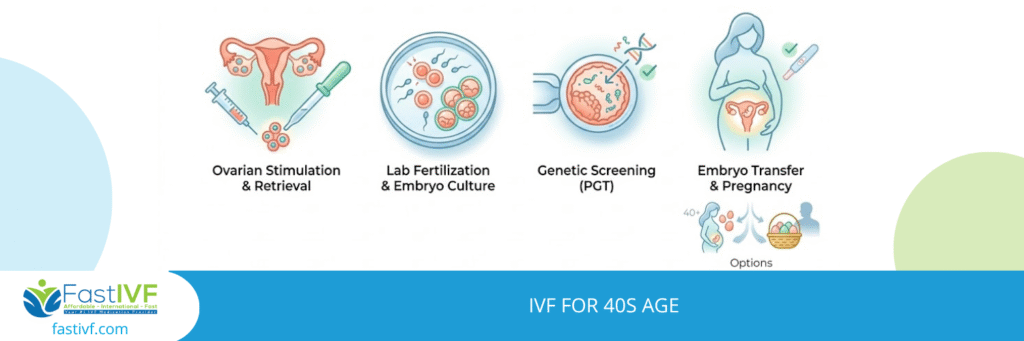
IVF (in vitro fertilization) uses IVF medications to stimulate your ovaries to produce multiple mature eggs. Those eggs are retrieved and fertilized with sperm in a lab. Embryologists then monitor embryo development for 3–5 days before transfer.
Patients can also choose Preimplantation Genetic Testing (PGT) to screen embryos for chromosomal abnormalities before transfer. For women over 40, this step is especially worth discussing with your doctor — it can reduce the risk of miscarriage and improve success rates.
Who Is a Good Candidate for IVF?
IVF is recommended for a range of situations: diminished ovarian reserve, blocked fallopian tubes, male factor infertility, unexplained infertility, and endometriosis. Being over 40 is considered a relative indicator for IVF because egg supply decreases faster with age.
For many women in their 40s, IVF with genetic testing offers the best shot at a healthy pregnancy. Selecting a chromosomally normal embryo for transfer improves implantation rates and lowers the risk of both pregnancy loss and birth defects. You can read more about how infertility affects IVF outcomes.
How Does Being Over 40 Affect IVF Success?
Egg quantity and quality naturally decline with age, this process speeds up in your late 30s and 40s. For women over 40, common challenges include:
- Lower response to stimulation medications
- Higher rate of chromosomal abnormalities in eggs
- Increased gestational risks
- Lower overall success rates per cycle compared to younger women
That said, many women over 40 do achieve successful pregnancies through IVF, especially when working with an experienced specialist. Age and egg quality are closely linked — understanding that connection helps you set realistic expectations.
What About Donor Eggs?
For women whose egg quality is a limiting factor, donor eggs are a well-established option. Donor eggs typically come from younger donors with higher egg quality and are screened for infectious diseases and genetic conditions. Donor profiles include general characteristics like hair color, eye color, height, and ethnicity.
Using donor eggs doesn’t change your ability to carry the pregnancy — it just changes where the egg comes from. Many women find this path leads to successful outcomes when their own egg quality isn’t sufficient.
What Role Do Hormones and Menopause Play?
Menopause typically occurs between ages 45 and 55, but it can happen earlier. In the years leading up to it, cycles may become irregular, heavier, lighter, or less predictable. These changes come from shifting hormone levels and can affect IVF outcomes.
Because of this unpredictability, family planning earlier is encouraged when possible. Options like egg freezing and embryo banking can preserve your options while you’re still in a stronger window for egg retrieval. A specialist can help you figure out what approach fits your situation best.
When Should You See a Specialist?
If you’re over 35, don’t wait 12 months — see a specialist after 6 months of trying. If you’re over 40, consider booking a consultation even before you start trying. Early testing can identify issues and give you more time to act.
For a detailed look at the full process, check out how IVF works step by step. If you’re weighing IVF against less involved treatments, our IVF vs. IUI guide covers the key differences in plain language.
Frequently Asked Questions
Can you do IVF at 42 or 43?
Yes. Many women in their early to mid-40s pursue IVF successfully, especially with PGT to select chromosomally normal embryos. Success rates are lower than for younger women, but pregnancy is achievable — particularly with donor eggs if needed.
What IVF medications are used for women over 40?
The same core medications are used — FSH injections like Gonal-F or Fostimon to stimulate the ovaries, a trigger shot like Choriomon HCG, and antagonists like Cetrotide to prevent premature ovulation. Dosages may differ based on your ovarian reserve.
Does egg quality decline after 40?
Yes, egg quality declines with age, and the rate accelerates after 35. By 40, a higher percentage of eggs carry chromosomal abnormalities, which is why PGT testing is commonly recommended for this age group.
Is it worth trying IVF naturally (with your own eggs) after 40?
Many doctors will try IVF with your own eggs first, especially if your ovarian reserve tests are acceptable. Donor eggs are usually suggested when multiple cycles with your own eggs haven’t worked or when reserve is very low.
Where can I get affordable IVF medications for my cycle?
Fast IVF carries European-brand IVF medications at significantly lower prices than US retail. A valid prescription is required. Request a free quote to get pricing for your full medication protocol.
IVF in your 40s takes more planning, but its absolutely achievable for many women. If your doctor has recommended IVF, Fast IVF can help you cut the cost of your medications without cutting corners on quality. Get your free quote here and see how much you can save.