



How is the IVF Process?
TL;DR — Quick Summary
- IVF involves stimulating the ovaries, retrieving eggs, fertilizing them in a lab, and transferring an embryo to the uterus
- Most cycles take 2–3 weeks from start to egg retrieval
- Frozen embryo transfers are now more common than fresh transfers
- The right medications at the right doses make a big difference in outcome
- Leftover embryos can be frozen for future use
The IVF process has several moving parts, but each step has a clear purpose. Understanding what happens and why can help you feel more prepared — and less overwhelmed — going into your first cycle. Here’s a plain-English breakdown of how IVF works from start to finish.
What Happens During an IVF Cycle?
Contents
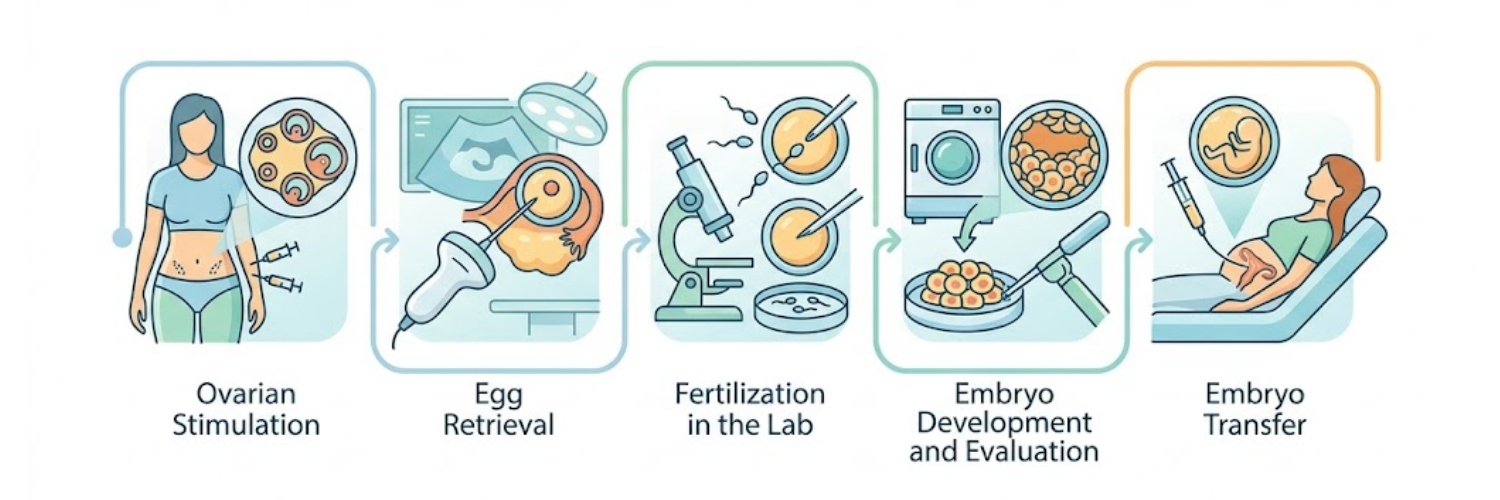
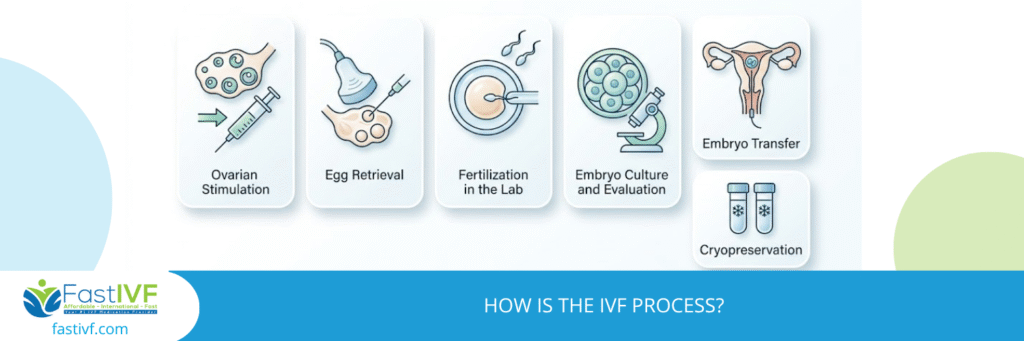
IVF doesn’t happen in a single day. A full cycle typically runs 2–3 weeks and involves five main phases: ovarian stimulation, egg retrieval, fertilization, embryo development, and transfer.
Step 1: Ovarian Stimulation
In a natural cycle, your body produces one egg per month. During IVF, your doctor prescribes IVF medications to stimulate your ovaries to produce multiple eggs at once. More eggs means more chances for a viable embryo.
The most commonly used stimulation medications are FSH-based injectables like Gonal-F and HMG medications like Menopur. Your clinic will monitor your response with blood tests and ultrasounds every few days. When your follicles reach the right size, you’ll take a trigger shot to finalize egg maturation — usually an HCG-based trigger injection given 36 hours before retrieval.
Step 2: Egg Retrieval
Egg retrieval is a minor outpatient procedure done under sedation. A doctor uses a thin needle guided by ultrasound to collect the eggs from your follicles. The whole thing takes about 15–20 minutes. Most patients go home the same day with mild cramping that passes quickly.
If injections are new to you, our guide on how to avoid bruising after IVF injections covers technique tips that make the stimulation phase more comfortable.
Step 3: Fertilization in the Lab
Once retrieved, your eggs are handed off to an embryologist. The eggs are fertilized with sperm — either through standard insemination or a technique called ICSI (intracytoplasmic sperm injection), where a single sperm is injected directly into each egg. ICSI is commonly used when there are concerns about sperm quality.
Step 4: Embryo Culture and Evaluation
Fertilized eggs develop in the lab for 3–5 days. Embryologists monitor their growth and grade them based on quality. The goal is to reach the blastocyst stage — a well-developed embryo with the best chance of implanting successfully. Not every egg will make it to this stage, and that’s normal.
Step 5: Embryo Transfer
The best-quality embryo is transferred into your uterus using a thin catheter. No anesthesia is needed — most patients describe it as similar to a pap smear. Progesterone support medications, like Progestan, are typically prescribed starting around retrieval day to prepare the uterine lining and support implantation.
Transfers can be done with a fresh embryo or — more commonly now — with a frozen embryo thawed from a previous cycle. Frozen embryo transfers (FET) often show equal or better outcomes because the body has had time to recover from stimulation.
What Happens to Unused Embryos?
Any viable embryos not transferred are cryopreserved (frozen) for future use. This is one of the biggest advantages of IVF — if your first transfer doesn’t result in pregnancy, you may not need to go through a full stimulation cycle again. Frozen embryos can be stored for years.
Frequently Asked Questions
How long does one IVF cycle take?
From the first day of stimulation medications to the embryo transfer, a typical IVF cycle takes 2–3 weeks. A frozen embryo transfer cycle can take a bit longer depending on your protocol.
Does IVF work on the first try?
Not always. Success rates vary by age, diagnosis, and clinic. Many patients need more than one transfer. That’s why having frozen embryos available from a single retrieval is so valuable — it reduces the cost and physical burden of repeat cycles.
What medications are used during IVF?
Most IVF protocols include FSH injectables for stimulation, a GnRH antagonist or agonist to prevent premature ovulation, a trigger shot to finalize egg maturation, and progesterone support after transfer. Your clinic will build a protocol specific to your situation. For a full overview, see our guide to IVF medications explained.
Is the egg retrieval procedure painful?
Most patients are under sedation during retrieval and feel little to nothing. Mild cramping and bloating afterward are common and usually resolve within a day or two.
How do I know which IVF medications I need?
Your reproductive endocrinologist prescribes your protocol based on your hormone levels, age, and diagnosis. Once you have your prescription, Fast IVF can supply European-sourced medications at a fraction of US retail prices. Get a fast quote to see what you’ll save.