


How to Boost Fertility?
TL;DR — Quick Takeaways
- Simple daily habits can improve egg quality, hormone balance, and your overall chances of conceiving
- Diet, moderate exercise, key vitamins, and stress management all make a measurable difference
- Lifestyle changes help, but they don’t fix every fertility issue — sometimes IVF medications are needed
- Fast IVF offers European-brand IVF medications at up to 80% less than US retail prices
There are easy tips to boost fertility that don’t require a prescription. Before or during IVF treatment, small daily habits can support egg quality, hormone balance, and how well your body responds to medication. According to the American Society for Reproductive Medicine (ASRM), lifestyle factors have a real and measurable effect on reproductive outcomes for both women and men. Here’s what you can start doing right now.
What Are Some Easy Tips to Boost Fertility at Home?
Contents
These five habits won’t replace medical care, but they work well alongside it — and they’re free to start today.
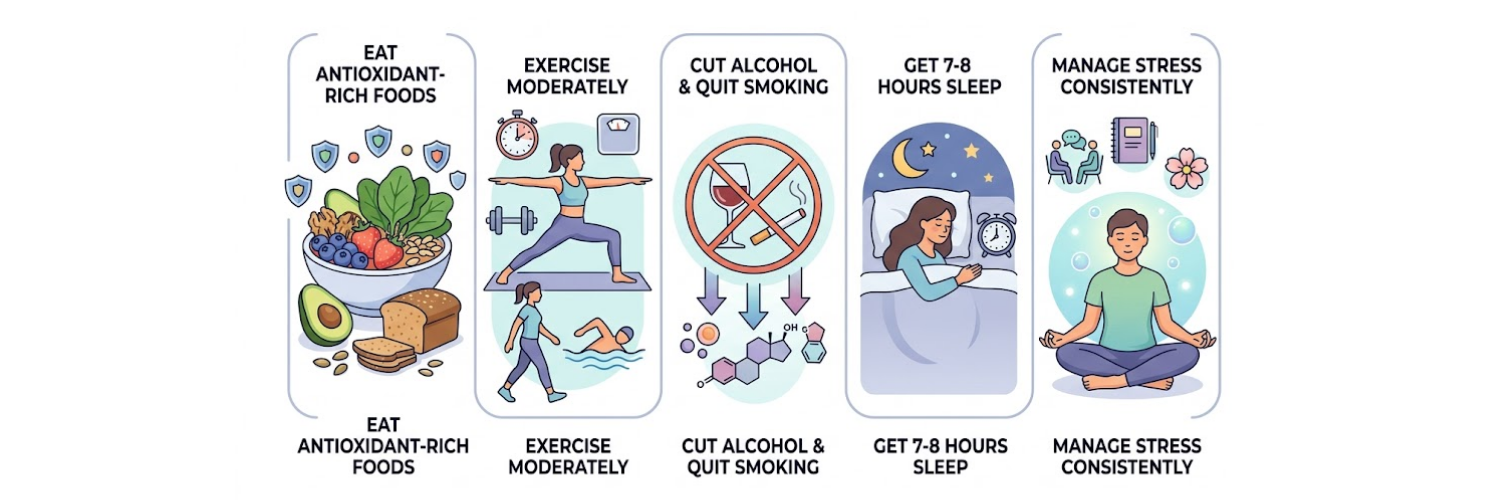
- Eat antioxidant-rich foods. Berries, leafy greens, walnuts, and seeds protect egg and sperm cells from oxidative damage. A strong fertility diet can also improve how your body responds to IVF stimulation medications.
- Exercise — but don’t overdo it. Moderate movement like walking, swimming, or yoga reduces stress hormones and helps regulate ovulation. High-intensity training, on the other hand, can backfire and disrupt your cycle. Check our guide to fertility-friendly exercises for the safest options during treatment.
- Cut alcohol and quit smoking. Both reduce egg quality and lower IVF success rates. Even light drinking can shift hormone levels in the wrong direction.
- Get 7–8 hours of sleep. Reproductive hormones are regulated during sleep. Cutting it short throws off that process.
- Manage stress consistently. High cortisol suppresses ovulation. Meditation, journaling, or therapy all work — the key is sticking with it.
Does What You Eat Really Affect Your Chances of Conceiving?
More than most people expect. Food directly impacts hormone production and egg cell health.
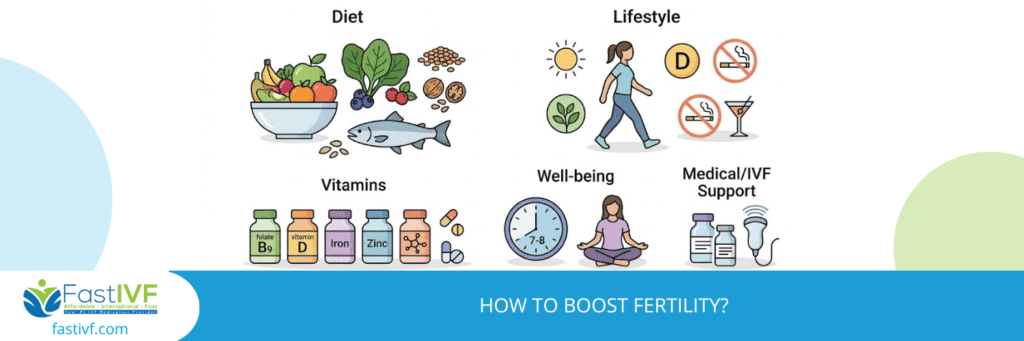
Focus on whole grains over refined carbs, healthy fats like avocado and olive oil over trans fats, and folate-rich foods like lentils, spinach, and chickpeas. Lean protein beats processed meat every time. Avoiding sugar spikes also helps, insulin resistance is closely linked to PCOS and irregular ovulation. Our preconception nutrition guide goes deeper on exactly what to eat before starting a cycle.
Which Vitamins and Minerals Help Boost Fertility?
Nutrient deficiencies are more common than you’d think. Before stacking supplements, ask your doctor to run labs. These are the most relevant ones to check:
- Folate (B9) — essential for early fetal development; most OBGYNs recommend starting before conception
- Vitamin D — low levels are associated with lower IVF success rates
- Iron — supports ovulation and egg health
- Zinc — important for egg maturation and sperm quality
- CoQ10 — often recommended for women over 35; supports egg quality, especially when age is affecting egg quality
- Omega-3 fatty acids — help regulate hormones and reduce inflammation
Don’t self-prescribe. Your doctor can identify what you actually need so you’re not wasting money on the wrong things.
When Are Easy Tips to Boost Fertility Not Enough?
Lifestyle changes help, but they don’t fix every cause of infertility. Structural issues, hormonal imbalances, or low ovarian reserve usually require medical treatment.
If you’ve been trying for over a year without success — or 6 months if you’re over 35 — talk to a specialist about starting IVF medications. The process typically involves stimulation, suppression, and trigger medications timed precisely to your cycle. Our 10 tips for IVF success cover everything from medication timing to what to expect at each stage.
The good news? You don’t have to pay full US retail prices for those medications. Fast IVF sources European-brand IVF medications from a licensed international provider at up to 80% less than what US clinics typically charge.
Frequently Asked Questions
Can lifestyle changes alone boost fertility?
For some people, yes — especially when the underlying issue is related to weight, stress, or nutrition. But many IVF cases involve medical causes that easy tips to boost fertility won’t resolve on their own. Think of healthy habits as support for your treatment, not a substitute for it.
How long does it take to see results from these habits?
Most nutritional and lifestyle changes take 2–3 months to show an effect on egg quality. That’s because eggs take roughly 90 days to mature. Be consistent and patient — the changes you make now affect the eggs that will be used in your next cycle.
What foods should I avoid when trying to conceive?
Processed foods, trans fats, excessive caffeine, and alcohol are the top ones to cut back on. High-glycemic carbs can spike insulin and disrupt hormone balance, which affects ovulation timing.
Does stress really affect fertility?
Yes. High cortisol levels suppress reproductive hormones and can disrupt ovulation. Stress management is one of the most underestimated easy tips to boost fertility, and consistently addressing it — through exercise, sleep, or therapy — adds up over time.
Where can I get affordable IVF medications if I need them?
Fast IVF sources European-brand IVF medications from a licensed international provider at a fraction of US prices. You can get a free quote in minutes — no obligation required.
Whether you’re still building healthy habits or already preparing for your first cycle, every step counts. If you’re ready to explore medication options, Fast IVF makes it easy to get started without the sticker shock.