



7 Things to Know About Clomid and Usage

TL;DR — Quick Takeaways
- Clomid (clomiphene citrate) is one of the oldest and most used medications for inducing ovulation — FDA approved since 1967.
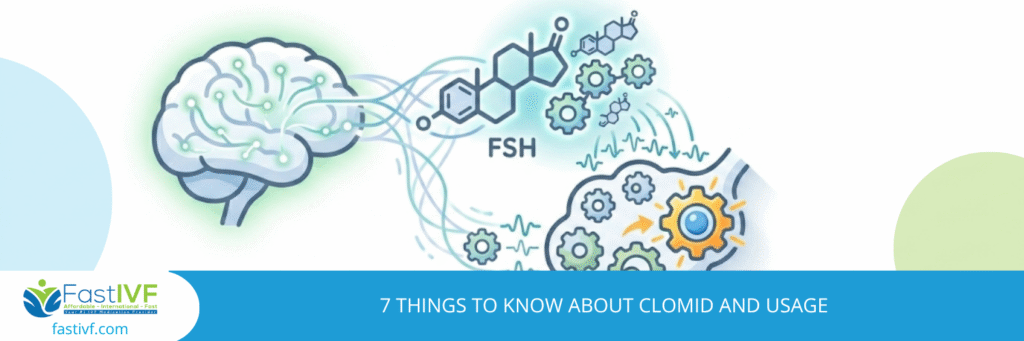
- It works by stimulating your brain to produce more FSH, which triggers egg development in the ovaries.
- About 80% of women ovulate on Clomid, and more than half of those go on to conceive.
- Side effects are generally mild but worth knowing before you start treatment.
- Clomid is also prescribed for male infertility in some cases.
Clomid (clomiphene citrate) is one of the most widely used medications for inducing ovulation in women who aren’t ovulating regularly. FDA approved since 1967, its taken orally and has a long track record compared to most IVF medications. If your doctor has recommended it – or you’re just researching your options – here’s what you need to know before starting.
What Is Clomid and How Does It Work?
Contents
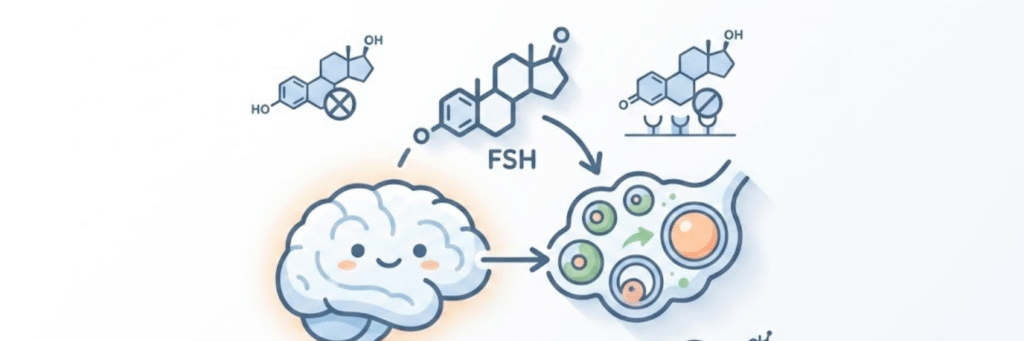
Clomid is not a hormone. It’s a selective estrogen receptor modulator that works by blocking estrogen signals in the brain. This tricks the hypothalamus and pituitary gland into producing more FSH (follicle-stimulating hormone), which stimulates the ovaries to develop one or more eggs.
This is different from injectable FSH medications like Gonal-F or Meriofert, which deliver FSH directly. Clomid nudges your body to make its own. That’s why it’s typically the first treatment tried before moving to injectables or a full IVF protocol.
Who Is Clomid Prescribed For?
Clomid is most commonly prescribed for women who ovulate infrequently or not at all. A normal cycle runs 21–35 days with one ovulation. If your cycles are consistently longer than 35 days, you’re ovulating fewer times per year — and Clomid is often the first step to correct that.
It’s also used for unexplained infertility and, less commonly, for male infertility — where it can help boost testosterone and sperm production in men with low levels caused by hormonal imbalance.
About 80 out of 100 women will ovulate on Clomid. Of those, more than half go on to become pregnant. Results vary based on age, diagnosis, and how well the ovaries respond.
How Do You Take Clomid?
Clomid is taken orally for five days, typically from cycle day 3 to cycle day 7, at the dose your doctor prescribes. Most women ovulate 7–10 days after their last pill. Your doctor will usually time intercourse, IUI, or monitoring around that window.
A few things to do before starting:
- Take 0.4mg of folic acid daily to reduce the risk of neural tube defects.
- Try to maintain a healthy weight – even modest weight loss can improve ovulation response.
- Track your cycle carefully. Day 1 is the first day of full bleeding.
If you reach cycle day 35 without a period, take a pregnancy test. If negative, contact your doctor — the dose may need adjusting. If positive, schedule an ultrasound.
What Are the Side Effects of Clomid?
Most side effects are mild and go away after the 5-day course ends. Common ones include:
- Hot flashes
- Headaches
- Bloating or pelvic discomfort
- Mood changes
- Temporary vision disturbances (tell your doctor right away if this happens)
One important long-term consideration: after several cycles, the ovaries can become less responsive to Clomid. If that happens, your doctor may switch you to injectable FSH medications or recommend moving to IUI or IVF. There’s also a slightly increased risk of twins or multiples due to the possibility of more than one egg developing per cycle.
According to the American Society for Reproductive Medicine (ASRM), Clomid is generally used for no more than 3–6 cycles before reassessing the treatment plan.
What Comes After Clomid?
If Clomid doesn’t result in pregnancy after several cycles, the next step is usually injectable gonadotropins — medications like Menopur or Gonal-F – combined with IUI or IVF. These are more potent and give your doctor more control over follicle development.
If you move to IVF, medication costs become a significant factor. Fast IVF carries the full range of IVF medications at prices well below US retail. You can compare options on our products page or request a free quote once your doctor has prescribed your protocol.
Frequently Asked Questions About Clomid
How long does it take to get pregnant on Clomid?
Most women who respond to Clomid and become pregnant do so within 3–6 cycles. If you haven’t conceived after 6 cycles, your doctor will typically recommend moving to a different treatment. The sooner you discuss next steps with your clinic, the more options you’ll have.
Can Clomid be used with IUI?
Yes – Clomid plus IUI is a common combination. Clomid handles ovulation induction, and IUI times the insemination precisely. This approach has higher success rates than Clomid with timed intercourse alone, particularly for unexplained infertility.
Does Clomid increase the risk of twins?
Slightly. Because Clomid can stimulate more than one follicle, the chance of releasing two eggs increases. Twin pregnancies occur in roughly 5–10% of Clomid cycles, compared to about 1–2% in natural cycles. Your doctor will monitor follicle development to manage this risk.
What’s the difference between Clomid and injectable IVF medications?
Clomid works indirectly — it stimulates your brain to produce FSH. Injectable medications like Gonal-F or Fostimon deliver FSH directly to the ovaries, giving doctors more precise control over the response. Injectables are typically used when Clomid hasn’t worked or when a stronger stimulation is needed for IVF. See our IVF medications guide for a full comparison.
Where can I get IVF medications if I move beyond Clomid?
Once your doctor prescribes injectables or a full IVF protocol, Fast IVF can fill your prescription with European-brand medications at significantly lower prices than US pharmacies. All major protocol medications are available — check the full product catalog or get a free quote to compare costs.