



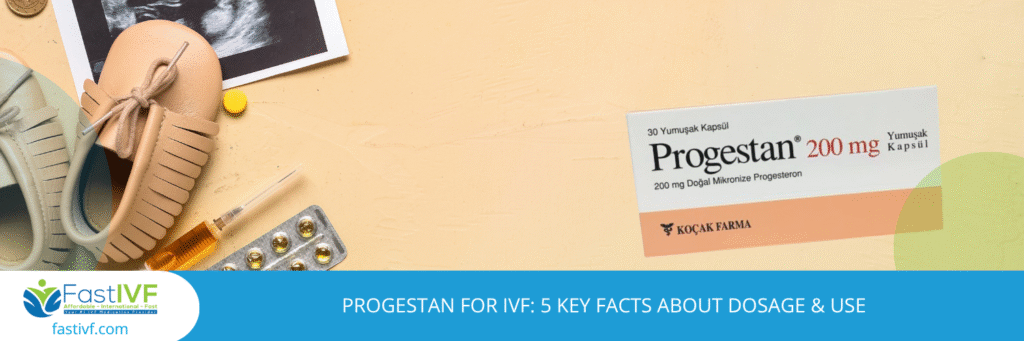
Progestan for IVF: 5 Key Facts About Dosage & Use

Quick Summary
- Progestan is a progesterone supplement used in nearly every IVF cycle to support implantation and early pregnancy.
- Two strengths are available: Progestan 100mg and Progestan 200mg — your clinic will prescribe the right dose.
- It’s usually taken vaginally once or twice daily, starting around egg retrieval or embryo transfer.
- Common side effects are mild and mostly local (discharge, spotting). Serious reactions are rare.
- Do not stop Progestan without your doctor’s approval — stopping too early can end a pregnancy.
Progestan ivf use is almost universal – if you’re doing IVF, there’s a good chance progesterone supplementation is already written into your protocol. But most patients get a prescription without much explanation. Here’s what you actually need to know.
What Is Progestan?
Contents
Progestan is a brand name for micronized progesterone – a bioidentical form of the hormone your body produces naturally after ovulation. In a natural cycle, the corpus luteum (the follicle shell left after ovulation) produces progesterone to prepare the uterine lining for implantation and maintain early pregnancy.
In IVF, the ovarian stimulation process disrupts this natural production. Fertility medications suppress the corpus luteum, so your body can’t make enough progesterone on its own. That’s where Progestan comes in – it replaces what the ovaries would normally provide.
Why Is Progestan Used in IVF Protocols?
After egg retrieval, progesterone levels drop sharply. Without supplementation, the uterine lining may not be thick or stable enough for the embryo to implant. Low progesterone in early pregnancy is also linked to higher miscarriage risk.
Progestan solves this problem directly. It:
- Thickens and matures the endometrial lining
- Prevents premature uterine contractions
- Supports the early embryo until the placenta takes over progesterone production (usually around week 10–12)
Almost every fresh and frozen embryo transfer cycle includes some form of progesterone support. Progestan is one of the most widely used options in European IVF protocols. For context on where it fits within the full medication timeline, see our IVF medications overview.
Progestan 100mg vs 200mg — What’s the Difference?
The dose depends on your protocol, not your body weight or age. Here’s how the two strengths are typically used:
| Strength | Typical Use | Frequency |
|---|---|---|
| Progestan 100mg | Lower-dose protocols, oral use (some clinics) | 2–3x daily |
| Progestan 200mg | Standard IVF luteal phase support | 1–2x daily |
Most IVF clinics prefer the vaginal route because it delivers progesterone directly to the uterus with minimal systemic absorption. This means fewer whole-body side effects compared to injections, and blood levels may not reflect how much is actually reaching the endometrium.
If your lab work shows low serum progesterone on your transfer day, your doctor may increase the dose or add progesterone in oil injections — don’t adjust on your own.
When Do You Start Taking Progestan in IVF?
The start date depends on your transfer type:
- Fresh transfer cycle: Progestan usually begins the day of egg retrieval or the day after, to give the lining time to mature before the embryo arrives.
- Frozen embryo transfer (FET): It typically starts 5–6 days before the transfer date in a medicated FET cycle — timed precisely to match day 5 blastocyst development.
Missing doses or starting late can affect lining quality, so set reminders and stick to the schedule. Our 10 tips for a successful IVF cycle has more practical advice on staying on track during your protocol.
What Are the Side Effects of Progestan?
Most side effects from vaginal progesterone are local and temporary:
- White or yellowish discharge (this is normal — it’s the capsule residue)
- Mild spotting or light bleeding
- Vaginal irritation or discomfort
Systemic effects (fatigue, bloating, breast tenderness, mood changes) can occur but are usually mild. These symptoms overlap with early pregnancy signs, which makes them easy to confuse during the two-week wait — and it’s important to remember that these symptoms alone don’t predict your result either way.
Serious allergic reactions are rare but possible. Stop use and contact your clinic if you notice hives, difficulty breathing, or severe pelvic pain. For a broader look at what to expect, our IVF side effects guide covers the full picture.
How Long Do You Take Progestan After Embryo Transfer?
If you get a positive pregnancy test, Progestan typically continues until the placenta fully takes over progesterone production — usually around 10 to 12 weeks of pregnancy. Your clinic will taper the dose gradually, not stop it suddenly.
If the result is negative, you stop Progestan and wait for a period before the next cycle. Never stop on your own based on a home test result — always confirm with your clinic first.
Where to Order Progestan for IVF
Fast IVF stocks both Progestan 100mg and Progestan 200mg capsules. We source from European manufacturers and ship internationally to patients and clinics. You can also browse the full progesterone category or visit our shop to order everything in your protocol at once.
If you need help confirming what your protocol requires, our team can assist via the contact page. For tips on managing the full medication cost, see our IVF medication discounts guide.
The American Society for Reproductive Medicine (ASRM) recommends progesterone supplementation as standard care in all IVF cycles – regardless of transfer type or patient age.
Frequently Asked Questions
Can I use Progestan orally instead of vaginally?
Some clinics allow oral use for certain patients, but vaginal delivery is preferred in most IVF protocols because it concentrates progesterone directly at the uterus. Oral progesterone is metabolized quickly by the liver, which reduces bioavailability. If vaginal use is uncomfortable, talk to your doctor about alternatives — but don’t switch routes without guidance.
Why is my progesterone level low even though I’m taking Progestan?
This is common with vaginal progesterone and doesn’t always mean inadequate supplementation. Vaginal delivery creates high local concentrations in the uterus that don’t always show up in blood tests. Your doctor will interpret your level in context — a “low” blood number doesn’t automatically mean the protocol is failing.
Is Progestan safe during early pregnancy?
Yes. Progesterone is a natural pregnancy hormone and is considered safe for supplementation in the first trimester. Multiple large studies have found no increased risk of birth defects with micronized progesterone use in IVF pregnancies.
What happens if I miss a dose of Progestan?
Take it as soon as you remember, unless it’s almost time for the next dose — in that case, skip the missed dose and continue on schedule. Don’t double up. Contact your clinic if you’ve missed more than one dose, especially around the transfer window.
Can Progestan cause a false positive pregnancy test?
No. Progesterone does not affect hCG levels, which is what home pregnancy tests and blood tests measure. A positive result while on Progestan reflects real hCG from implantation.