


Improve Fertility
Quick Takeaways
- Regular moderate exercise is one of the most effective natural ways to improve fertility.
- The right type of exercise matters — too much high-intensity training can actually suppress ovulation.
- Yoga, walking, swimming, and strength training all support reproductive health in different ways.
- Pelvic floor exercises are especially useful during pregnancy and after IVF transfer.
- Always check with your doctor before starting a new exercise routine during fertility treatment.
Exercise is one of the most accessible ways to improve fertility — but the type, intensity, and timing all matter. The right movement supports hormone balance, healthy weight, circulation, and stress reduction. Too much of the wrong kind can do the opposite. Here’s what the evidence says about which exercises actually help.
Which Exercises Help Improve Fertility?
Contents
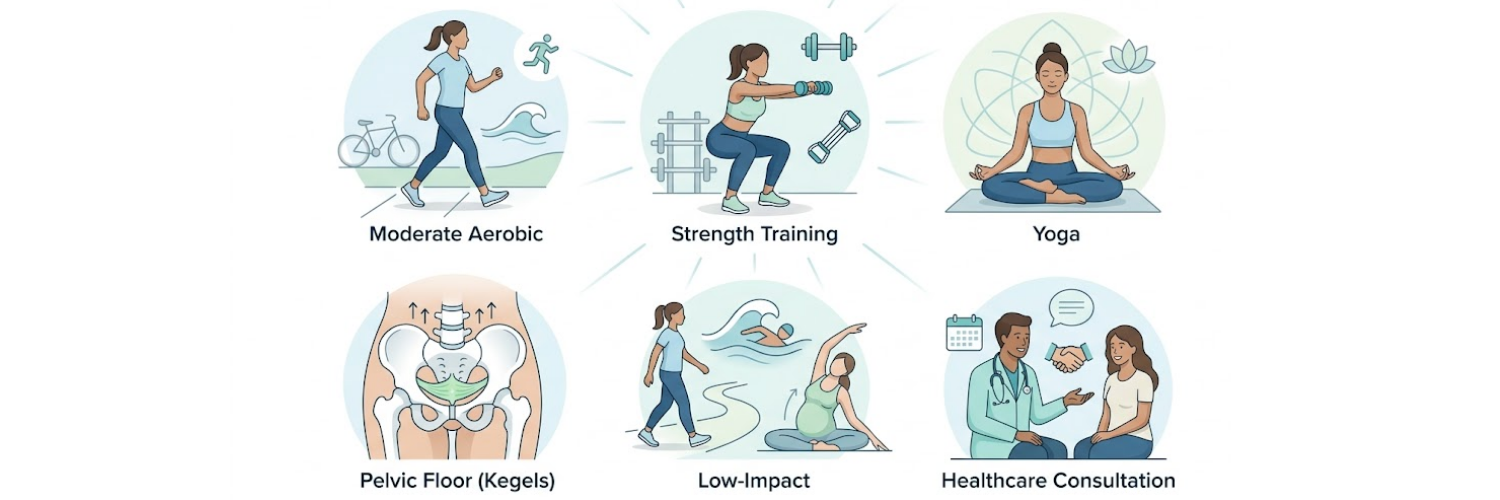
1. Moderate-Intensity Aerobic Exercise
Brisk walking, cycling, swimming, and light jogging are consistently linked to better fertility outcomes. These activities help maintain a healthy weight, reduce cortisol levels, and improve cardiovascular health — all of which support regular ovulation and healthy sperm production. Aim for 30 minutes most days of the week at a pace where you can still hold a conversation.
2. Strength Training
Resistance training improves insulin sensitivity, which is particularly important for women with PCOS — one of the most common causes of ovulatory infertility. Building muscle also supports a healthy body composition without the hormonal disruption that extreme cardio can cause. Two to three sessions per week at moderate intensity is a sensible starting point for most patients going through IVF treatment.
3. Yoga
Yoga combines flexibility, breathwork, and stress reduction in a format that’s safe during most stages of fertility treatment. Stress-related hormonal disruption is a real factor in cycle irregularity, and yoga is one of the better-studied interventions for reducing it. Many IVF patients find that a consistent yoga practice helps them manage the emotional weight of treatment alongside the physical side. You can also pair it with the habits covered in our fertility exercise guide for a more complete routine.
4. Pelvic Floor Exercises
Kegel exercises strengthen the pelvic floor muscles, which support the uterus, bladder, and bowel. A strong pelvic floor reduces the risk of urinary incontinence during pregnancy and supports recovery after IVF cycles and childbirth. These can be done anywhere, anytime — no equipment needed. Your reproductive endocrinologist or a pelvic floor physiotherapist can advise on correct technique if you’ve never done them before.
5. Low-Impact Exercise During Treatment and Pregnancy
Once you’re in an active IVF stimulation cycle or confirmed pregnancy, low-impact options are safest. Walking, swimming, and prenatal yoga are ideal — they keep you active without placing stress on the ovaries or abdomen. High-impact or contact sports, heavy lifting, and intense interval training are generally not recommended during stimulation or the two-week wait after embryo transfer. See our guide on IVF side effects for more on what to avoid during treatment.
What Exercise Should You Avoid When Trying to Conceive?
Excessive high-intensity training — particularly long-distance running, intense CrossFit-style workouts, and very high-volume training — can suppress ovulation by disrupting the hypothalamic-pituitary-ovarian axis. This is more common in women with low body fat or high training loads. If your cycles have become irregular since increasing your training, that’s a sign to pull back.
According to the American Society for Reproductive Medicine (ASRM), women undergoing IVF should avoid strenuous exercise during ovarian stimulation due to the risk of ovarian torsion — a rare but serious complication in enlarged ovaries. Always check with your doctor before continuing or starting any exercise program during an active IVF cycle.
How Does Exercise Connect to IVF Outcomes?
Maintaining a healthy weight through regular exercise directly affects IVF success rates. Both underweight and overweight patients tend to have lower response rates to stimulation medications and higher cancellation rates. A healthy BMI improves how your body responds to IVF medications like Gonal-F or Menopur, which work by stimulating the ovaries to produce multiple eggs.
If you’re starting an IVF cycle and want to understand the full medication protocol, our IVF medications explained guide covers what each drug does and when it’s used. And if cost is a concern, Fast IVF provides European-brand equivalents at significantly lower prices than US pharmacies — you can request a free quote once your doctor has given you a protocol.
Frequently Asked Questions About Exercise and Fertility
How much exercise is good for fertility?
Most research points to 30 minutes of moderate activity 4–5 days per week as the sweet spot. This is enough to support healthy weight, hormone balance, and cardiovascular health without suppressing ovulation. If you’re already very active, the question is whether your current volume is disrupting your cycle — irregular periods or loss of period are the clearest warning signs.
Can I exercise during IVF stimulation?
Light activity like walking and gentle yoga is generally fine during stimulation. However, higher-intensity exercise, heavy lifting, and high-impact activity should be paused once your ovaries start responding to medication. Enlarged ovaries are more vulnerable to torsion. Follow your clinic’s specific guidance — protocols vary by patient.
Does yoga actually improve IVF success rates?
There’s no direct evidence that yoga increases IVF success rates, but it does meaningfully reduce stress and anxiety — which affect treatment adherence, sleep, and overall wellbeing during a demanding process. For many patients, that indirect benefit is worth a lot. Mind-body programs specifically designed for IVF patients are available at many fertility clinics.
What other lifestyle factors improve fertility alongside exercise?
Diet, sleep, stress management, and avoiding smoking and heavy alcohol use all work together with exercise. Our fertility diet guide covers specific foods and nutrients with the strongest evidence for supporting reproductive health. Small consistent changes across all these areas tend to outperform any single intervention on its own.
How do I know if my exercise habits are hurting my fertility?
The clearest sign is cycle disruption — cycles becoming longer, more irregular, or stopping altogether. Low energy, frequent illness, and poor recovery from workouts are also red flags. If you’ve noticed any of these since increasing your training load, speak with your doctor. A reproductive endocrinologist can run basic hormone tests to assess whether your exercise habits are affecting your ovarian function.